Quick answers
- Start with the job, not the material
- Privacy, security, boundary marking and curb appeal point at genuinely different fences.
- Lowest maintenance
- Vinyl and composite. Highest is untreated wood.
- Best all-round for this coast
- Cedar with steel posts and a rot board, sealed on a schedule.
- Check first
- Local height limits and, if you have one, the HOA — before you choose anything.
A fence does more than mark a boundary. It is the difference between a back yard you use and one you look at, and — done properly — it adds to what the house is worth. This walks through how to choose one for a Texas home: the rules first, then the material, then what each material will ask of you in five years.
Understand the rules before you choose anything
Cities and counties across Texas set their own rules on height, material and installation. Some cap residential fences at 6 ft; others allow taller for security or privacy. Check with the local zoning office — or ask us and we will check it for you.
If you are in an HOA community, get approval before anything is ordered. HOAs have their own guidelines on material, height and design, and they are usually stricter than the city. Specific local limits for Houston, San Leon and League City are in our Houston planning guide.
The materials, compared
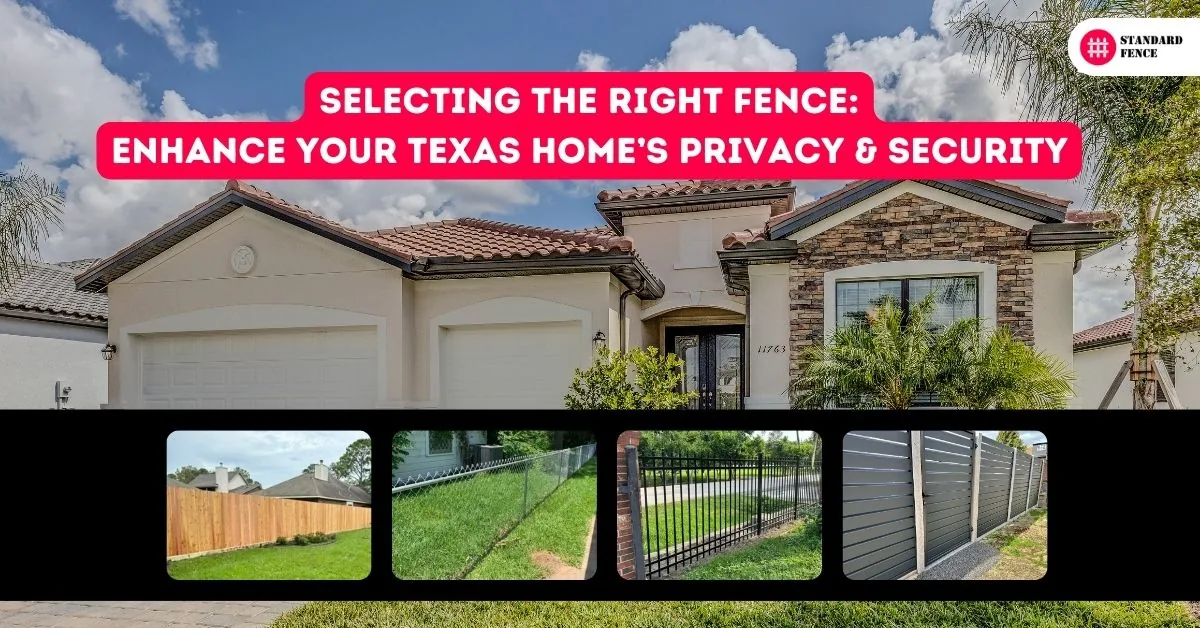
Wood — the classic, and still the most popular here
Wood gives you a natural look and real privacy, and it can be customized in a way nothing else can. The trade is maintenance: it wants staining or sealing on a schedule to survive Texas weather. The woods you will see discussed:
- Cedar — naturally resistant to decay and insects. The one we build most.
- Pine — more affordable, usually pressure-treated for durability.
- Redwood — rich color and strength, resists warping.
- Cypress — naturally resistant to moisture and pests.
- Spruce — light and easy to work, but needs the most upkeep.
For context: we build primarily in cedar and pressure-treated pine, which is what the material supply and the climate here both favor. The rest are listed because you will meet them while you are researching.
Chain link — affordable, secure, low maintenance
Ideal where budget leads. It gives you security without much privacy, but it lasts and it asks almost nothing of you. Privacy slats can be added later if your needs change.
Metal — strength that lasts decades
Aluminum and wrought iron combine security with curb appeal, need very little upkeep, and last a long time. Powder-coated finishes are what make them work near salt air.
Composite — low upkeep, modern look
A blend of wood and plastic that resists weathering, rot and pests. Higher upfront cost, very little maintenance, and a clean modern line. We build composite decks regularly for the same reasons.
Custom gates
A custom gate is what turns a fence line into something people notice. It is also the part that gets used every day, so hardware sized for the weight and the wind matters more here than anywhere else on the run.
Two questions to answer before you commit
What do you need it to do?
Privacy, security, or decoration? The answer drives style and material more than taste does. A front-yard fence and a back-yard fence on the same property often should not be the same fence.
What will it ask of you later?
Materials differ as much in upkeep as in price. A cheaper fence with higher maintenance can cost more across ten years than a more expensive one that needs nothing. Decide which of those you would rather pay.
What the installation looks like
- Consultation and site survey. We visit, measure, and talk through what you need — then help you choose material and design for the space.
- Planning and design. We build a design that meets your needs and complies with local zoning and HOA rules.
- Installation day. Posts go in first, then panels, everything checked level and stable as we go.
- Aftercare. You get the maintenance guidance for the material you chose — cleaning and inspection intervals that actually keep it going.
Problems fences develop, and what to do
- Rust and rot. Texas weather rusts metal and rots wood. A rust-resistant coating on metal and a seal on wood, applied before you need them, prevent both.
- Safety issues. Sharp edges, loose posts and broken panels get worse and become hazards. Repair them when you spot them, not later.
- Shortened life. Cleaning and resealing wood on a schedule adds years. It is the highest-return maintenance there is on a fence.
What determines the cost
Broadly, fences run $15–$40 per foot depending on material and size, with wood higher and chain link lower. For real local numbers rather than a national range, use the per-material tables in our League City cost guide.
Budget for the costs that are not the fence: permits where they apply, a land survey if the boundary is unclear, and disposal of the old fence. Ask for an estimate that itemizes all of it — a single number hides exactly the things that change later.
A job on this coast
Bob B., a homeowner in San Leon, wanted more privacy and security in his back yard. We removed the old, broken-down fence and installed over 200 feet of new fencing shared between neighbors. Posts aligned, site cleaned at the end of each day. In his own words on our reviews page: "Sam and his crew are professional and courteous fence craftsmen who pay attention to detail... Old fence demo, new fence build and final cleanup all exceeded my expectations."
Why Standard Fence
- 15+ years on this coast. Wind, salt air, humidity and clay-to-sand soil are the conditions we build for, not conditions we adapt to.
- Licensed and insured. The job is completed safely and to standard.
- Competitive pricing, line-item quotes. You see what each part costs, so you can change your mind about a gate without renegotiating the whole job.
Ready for an exact number?
We walk the line, measure, check access and HOA rules, and give you a line-item quote — usually the same day.